The system can monitor environmental and physical parameters such as movement, vibration, temperature, humidity, and magnetic changes. It can be expanded with special sensor components according to mission requirements.

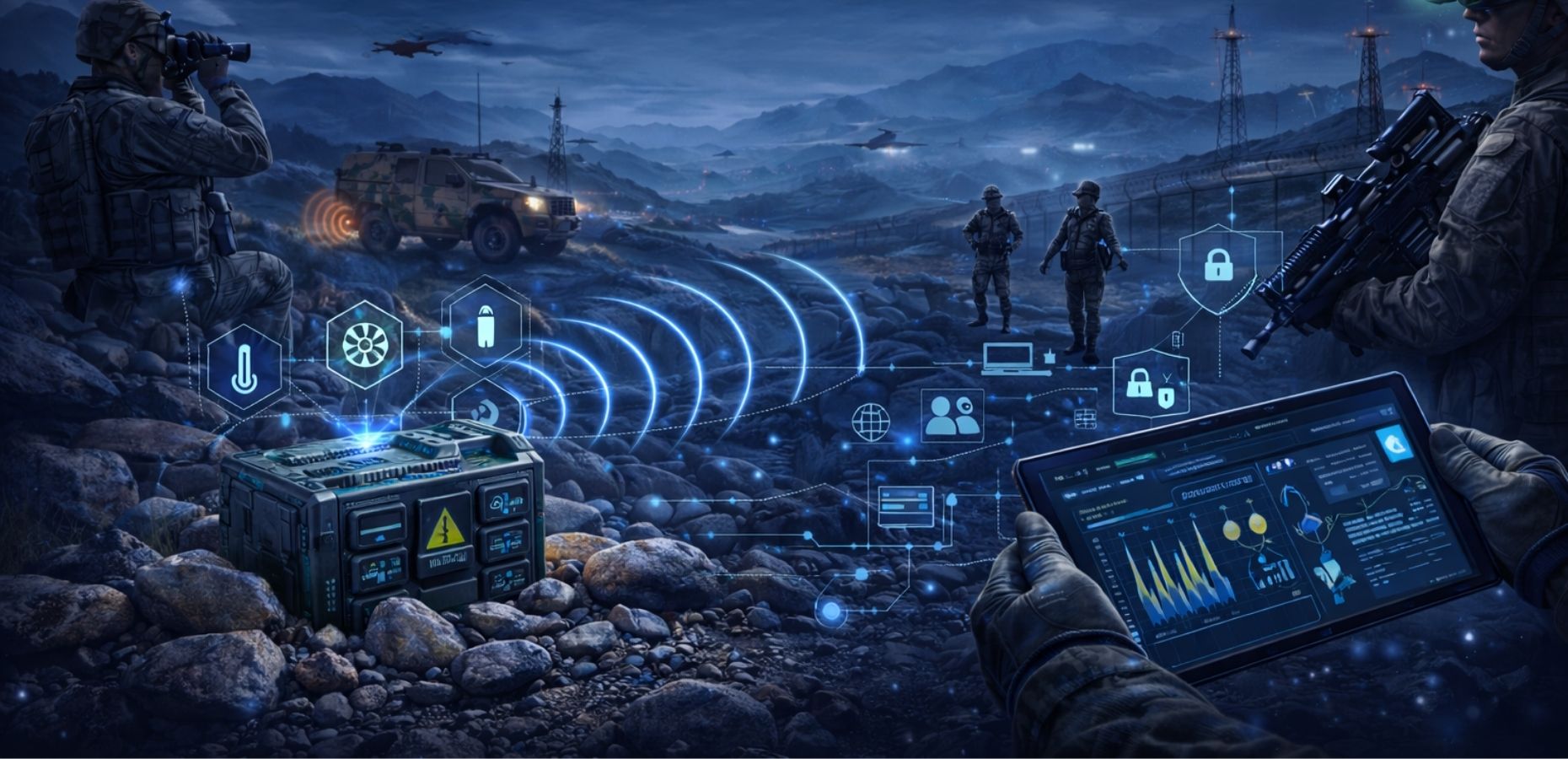
Military IoT Sensor is a flexible hardware platform capable of operating with sensor components defined for movement, vibration, temperature, humidity, magnetic fields, or specific mission requirements. When deployed in the field, it collects and analyzes data according to defined scenarios and generates alarms through a triggering mechanism.
The system was developed to provide situational awareness in border security, base perimeter control, critical infrastructure protection, reconnaissance area monitoring, and temporary operation zones. It offers real-time monitoring, historical reporting, and event analysis capabilities by working integrated with the central software infrastructure.
It can be configured with different sensor components according to the mission scenario; the system capacity can be expanded by adding new modules when needed.
It provides continuous connection to the central control system by ensuring data transmission over distances of kilometers via LoRaWAN or similar low-power communication infrastructures.
Collected data can be viewed instantly on the central software panel; automatic alarm and notification mechanisms are activated when threshold values are exceeded.
It ensures long battery life through optimized power management and supports operational continuity by reducing maintenance needs in the field.